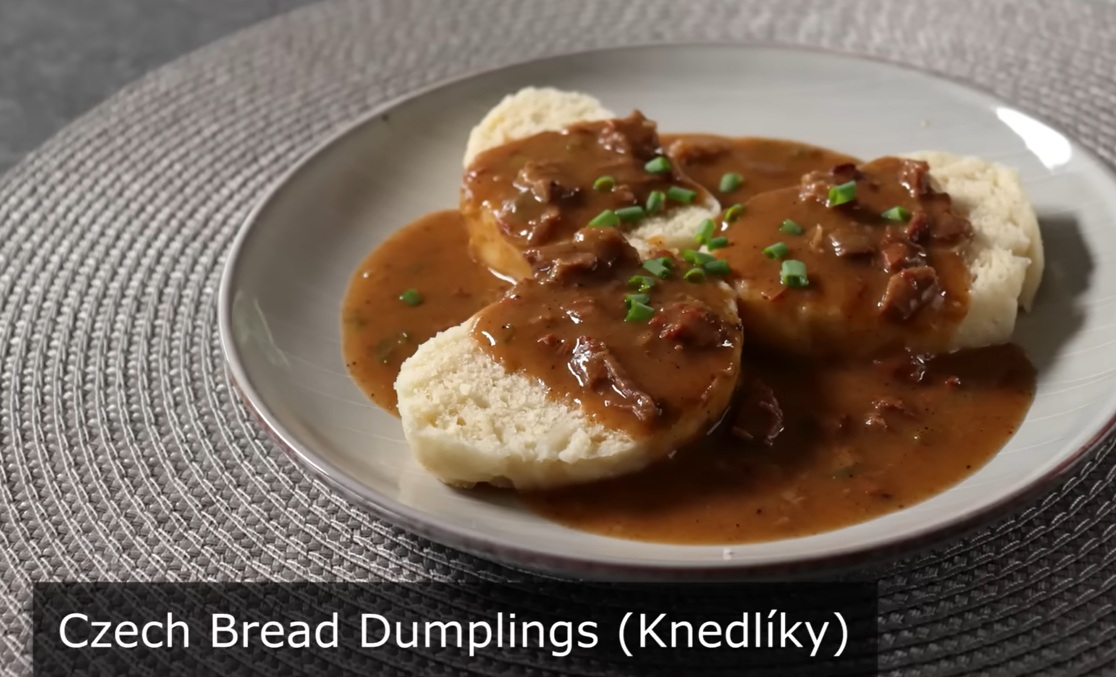
Czech
Dumplings - Knedlíky
Ingredients -- Ovo-Lacto Vegetarian
I have not found any way to
make Czech Dumplings ("Knedlíky") into a Keto food.
Substitute flours won't work. But the dumplings are so
very good, that I make them occasionally as a treat. The
best flour for these is Wondra brand, in the blue cylinders --
the results are much better than other types of all-purpose
flour or even bread flour. The only acceptable
substitute I ever found was when I was living in Mexico and
Wondra wasn't available... I found that tortilla flour
got acceptable results.
These dumplings are traditionally served with corned beef, or
pork cutlets or schnitzel and dill sauce.
The meat and dill sauce are, of course, keto. Here's a video
also.
- 2 cups Wondra flour
- 2 egg yolks
- 1 package yeast
- 1/2 cup milk (perhaps a little more), at room
temperature or above
- pinch of sugar, dash of salt, optional oil for
"waking up" the yeast
- 1 toasted french roll, diced into small
cubes. Croutons might work if they aren't flavored.
It's worth the effort to "wake up" the
yeast. The success of this recipe depends on the yeast,
so be sure your yeast is reasonably fresh. In a small
bowl, place your milk (1/2 cup) and add a
generous pinch of sugar and a regular pinch of
salt. Adding a small drop of cooking oil can also
help. Stir to dissolve the sugar & salt.
Heat this milk mixture to body
temperature or baby milk temperature. Traditionally one
tests for this by taking a few drops of the milk in a spoon
and letting them drip over the back of your hand. If the
hot milk stings even the tiniest bit, it's too hot for the
yeast. If it's too hot, wait and let the milk cool, or
else you'll just kill your yeast. Ideally the drops of
milk feel cozy and comfortable on the back of your hand, not
cold, not hot.
Add the yeast to the lukewarm milk and cover the bowl with a
kitchen towel. Wait about 20 minutes. The mixture
should foam up and smell of carbon dioxide ("yeasty"
smell).
Place this milk into a larger mixing bowl and add the other
ingredients, except for the cubed bread. Ideally my
grandmother (babinka) would knead this dough in the bowl of a
food processor. If a food processor isn't available,
forcefully mix with a wooden spoon until the dough ball is
elastic and holds together instead of sticking to the
bowl. This might take awhile, 15-20 minutes by
hand. Adjust the moisture by adding a little bit of
flour, or a little bit of milk, as necessary. The dough
should be sticky and cohesive but not firm or dry.
Finally, add the diced french rolls and mix in well by
hand. French rolls should stick into the dough, but
sometimes the cubes don't stick well. Croutons don't
stick well. That's life.
Gather the dough into a ball and put a small amount of cooking
oil into the mixing bowl along with it. Turn the dough
over and stir it around, so the dough ball is just lightly
coated with oil. Now cover the mixing bowl with a
kitchen towel, and allow the dough to rise in a warm place
until doubled, about 40 minutes.
Remove the dough from the bowl gently (it has just risen
again) and place it gently on a flour-ed cutting board.
Gently separate & form the dough into two large rough
cylinders, about 2+1/2 inches in diameter. Dust each
cylinder with a bit more flour.
Gently transfer these two large dumplings into a very large
pot of boiling, well-salted water. Boil about 30-40
minutes. Flip them over halfway through, without
removing from the water. At high altitudes, boil them
about 10 to 15 minutes longer.
They should now be solid enough to remove and set on a
plate. Poke each dumpling several times with a toothpick
or small pick in order to release steam from the center.
While still hot, cut each dumpling into bread-like slices,
with a traditional wire dumpling cutter, a very sharp bread
knife, or string. They should be like fluffy slices of
bread, dry on the inside -- but instead of a dry crust like
regular bread, there is a gooey sticky crust around them.